


𝐖𝐢𝐥𝐥𝐢𝐚𝐦𝐬 𝐒𝐭𝐫𝐞𝐞𝐭 𝐁𝐫𝐢𝐝𝐠𝐞: 𝐀 𝐊𝐞𝐲 𝐒𝐭𝐫𝐮𝐜𝐭𝐮𝐫𝐚𝐥 𝐌𝐢𝐥𝐞𝐬𝐭𝐨𝐧𝐞 𝐄𝐧𝐚𝐛𝐥𝐢𝐧𝐠 𝐌𝐞𝐥𝐛𝐨𝐮𝐫𝐧𝐞 𝐌𝐞𝐭𝐫𝐨’𝐬 𝐓𝐫𝐚𝐧𝐬𝐟𝐨𝐫𝐦𝐚𝐭𝐢𝐨𝐧
To support the development of Melbourne Metro, the city has been undergoing a steady transformation — with infrastructure upgrades shaping a more connected, future-ready urban network.
An animation released by Architectus highlights how the Williams Street Bridge was safely erected above the rail corridor in just one weekend, showcasing a complex structural achievement that strengthens connections between communities and enhances mobility across the city.
The milestone reflects the power of coordinated expertise and long-term planning in delivering major public infrastructure.
Thanks to the project collaborators: John Holland, CPB Contractors, Alstom, AECOM, @Rail Projects Victoria, Metro Trains Melbourne, Office of the Victorian Government Architect (OVGA), and Bowhill Engineering.
Railway Corridor Challenges: Right from the start, this project had some ambitious goals, being a bridge within the rail corridor in Melbourne. The window for closures to install were small and difficult to change.
This being the case the Metro Tunnel/RIA team needed the surety that everything would fit 1st time to allow the erection of the whole bridge and trans-floor slabs to happen in just one weekend.
This coupled with a very tight construction timeline leading up to the install generated a massive challenge for Bowhill and indeed RIA.
Add to this situation the requirement to pre-assemble the main elements off site (at Bowhill) to guarantee fit-up on site and the stage was set for one heck of a project.
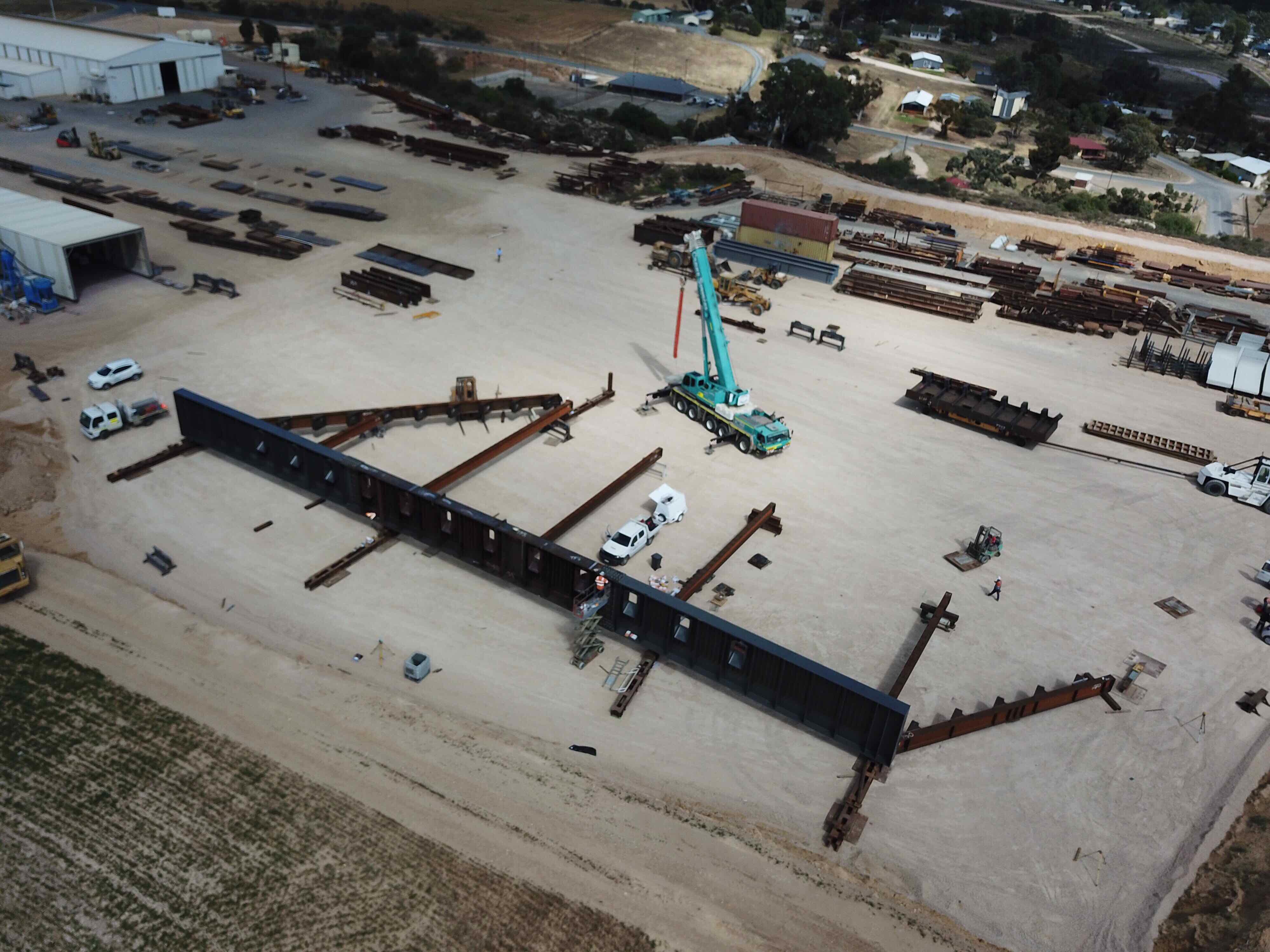
Bowhill’s team worked big hours and adopted some innovative procedures to bring the fabrication and welding into line with the program. Next challenge was taking the main elements (some only partially completed) out of the workshop to allow the full-scale trial assembly without “burning” too much program.
Fortunately, Bowhill had only just finished the civil works for their 110mx110m hardstand extension which was available in perfect time for this significant prebuild of the 60m x 25m x 4m deep main girders.
Bowhill’s CC3 compliance (NSSCS) was another big tick to the RIA project team, it also provided them the piece of mind that the systems and procedures required for bridge building were thorough and complete and would not hinder the project.
Safety/efficiency; To safely use the onsite crane’s maximum allowable rating Bowhill provided the data from an in-house developed calibrated weighing system. This data extended to all larger elements and was done after surface treatment to ensure absolute data integrity and lift planning surety. We offer this service to all of our clients as a value add now.
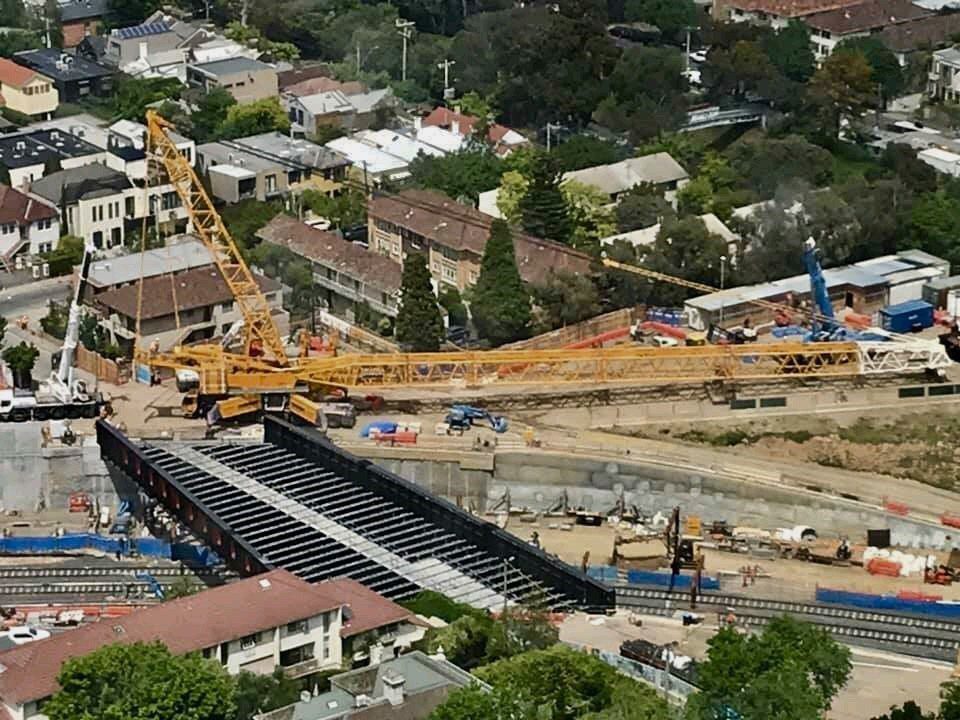
Timing; It is testament to the whole team that the entire structure was able to be safely erected over the rail corridor within RIA’s ambitious program of just one weekend.