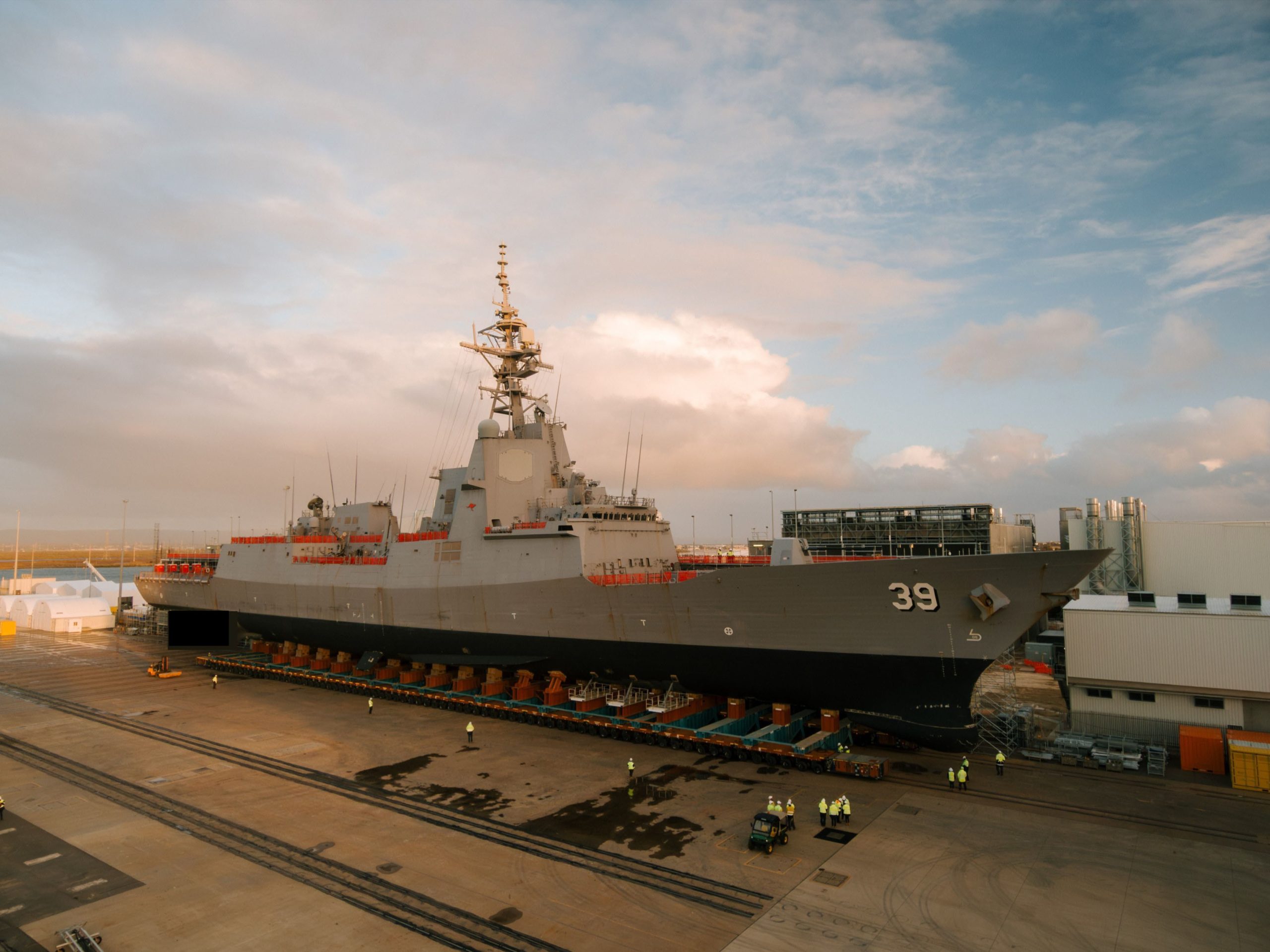




Steel Fabrication For Defence Infrastructure
South Australia’s defence sector doesn’t leave room for error, and neither do we. Bowhill Engineering has built a reputation on the kind of projects where tolerances are tight, compliance is non-negotiable and the client needs a partner who understands what’s actually at stake.
We’ve spent over 40 years in heavy and complex structural steel fabrication. We are AS5131 CC3 certified for fabrication and erection, hold Weld Australia AS3834.2, and run ISO9001 Quality, ISO45001 Safety and ISO14001 Environment systems and are DISP Baseline Certified. That is the baseline a defence prime needs before the conversation even starts. The track record is what earns the second call.
From our Bowhill facility, we handle the full scope, design input, fabrication, machining, surface treatment and erection, all under one contract and one accountable team. That matters in defence work more than almost anywhere else, because it means fewer handoffs, fewer places for something to slip through the cracks, and one point of contact who owns the outcome.
Built For The Naval Sector
Certifications get a fabricator through the door. What keeps a client coming back is naval-grade work delivered without issues.
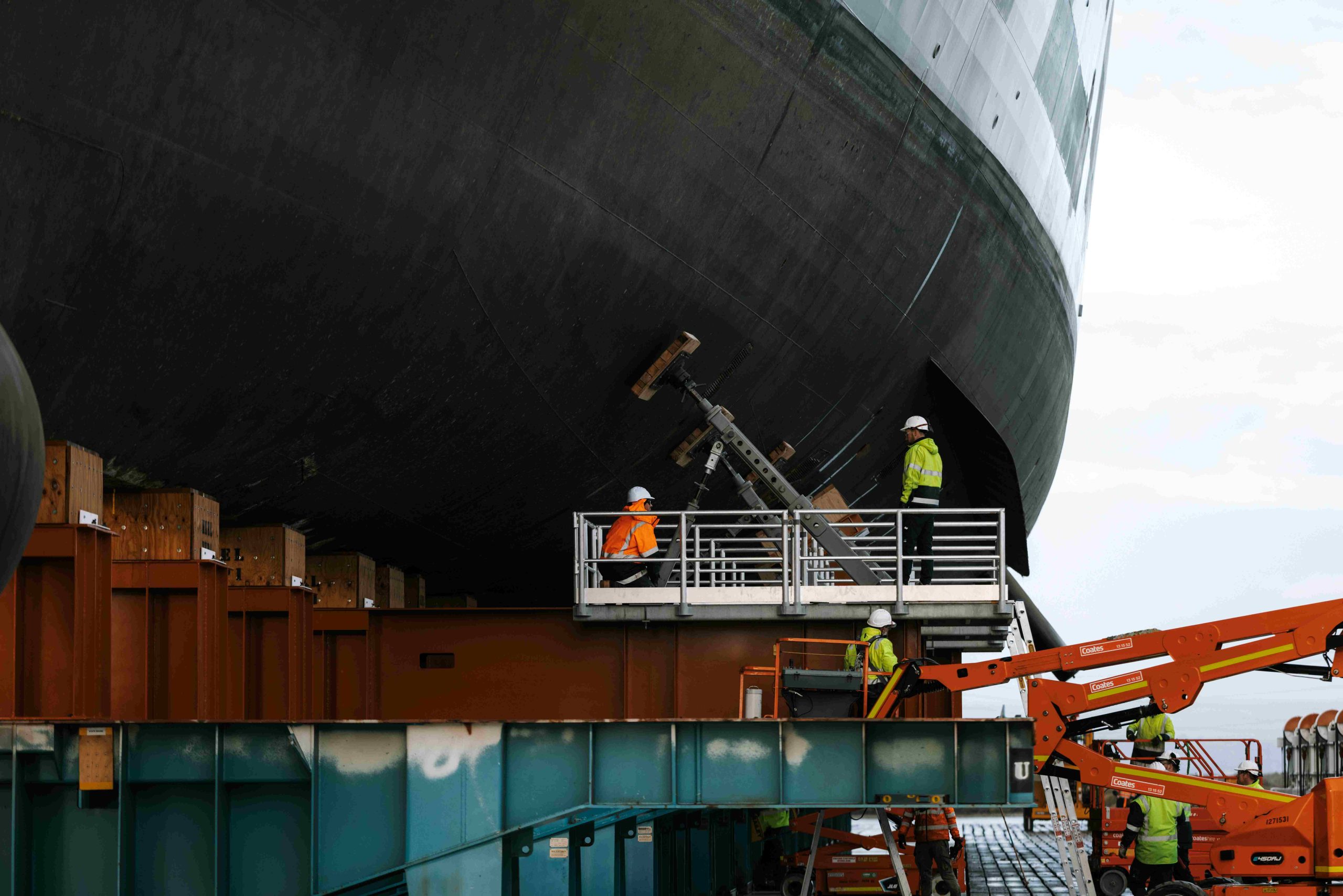
Our work for Australian Naval Infrastructure includes ship cradle support trestles, keel support frames, sheave lifting tools, large pile driving guides, and even sliding bilge block frames. One batch alone ran to 23 heavily reinforced tapered plate girders, 14 metres long, at 14.4 tonnes each.
A number of these were repeat orders, fresh batches built to match sets we had already delivered and had in service. When a client comes back for the same steel again, it tells you the first lot fitted and did its job. We have also delivered significant elements like shiplift hoist frames and transfer beams built to the shipyard’s demanding requirements, work that called for a strategic assembly and welding methodology to reduce lamination of this complex fabrication, and significant post-weld machining.
The Workshop Behind Our Defence Steelwork
Naval work depends on tolerance, so we build with the gear to hold it. We run three IGM robotic welding systems on a 60 metre rail with 5 metres of clearance under the robot head, this is among the largest robotic welding installations in the country, to ensure accuracy every critical dimension is checked with laser scanning and total station survey against the 3D model. Our 8.1 wide metre blast chamber, one of the widest in South Australia, coats items up to 70 metres long undercover, and the B5 High Bay workshop gives us a 100 tonne gantry and the headroom for the heaviest work we take on. Our CNC double column Machining Centre, a 5 axis machine with an impressive 2.5m x 6.5m bed & 2.3m under the spindle. It can handle 43 tonnes and is able to operate autonomously once it’s set up, loaded and programmed. Ideal for heavy plate components that require post-weld machining to meet critical tolerances.
Compliance Is A Habit, Not A Checklist
We do things the right way, every time. No exceptions. That line sits at the heart of how we run, and for defence procurement it is the whole point. Our quality, safety and environmental documentation is built to be audited, accessible and complete, so the paperwork holds up as well as the steel.
We’ve been running our compliance and certification process for over a decade. On a defence program that means the audit trail is complete and ready to hand up, not assembled after the fact.
Defence Steel Fabrication FAQs

Why The Right Fabricator Lowers Your Risk
On a defence program the wrong fabricator isn’t just a delivery problem, it’s an audit exposure and a schedule you can’t afford to slip. The right one is a specialist who carries the compliance and the complexity with you, not a supplier that just takes the order.